
Gen-AI Study Buddy for Health Science major - Research Study
OVERVIEW
The Gen AI Study Buddy project was a research study that looked at how healthcare students use AI tools and chatbots to study, especially as AI becomes more common in education. We focused on the first part of the design process: understanding the problem and defining it clearly. At first, we thought AI chatbots could act like reliable study partners. But after talking to students and doing interviews, we found that there’s a gap in how students actually use them. Our research showed that instead of acting like tutors, AI tools work better as helpful extras to support studying.
MY ROLE
Internal & External Secondary Research, Field Study, User Interviews, Persona building, User journey mapping, Storytelling, Insights Development.
TIMEFRAME
8 Weeks
TOOLS
Figma, FigJam, Miro, Google forms
THE CHALLENGE
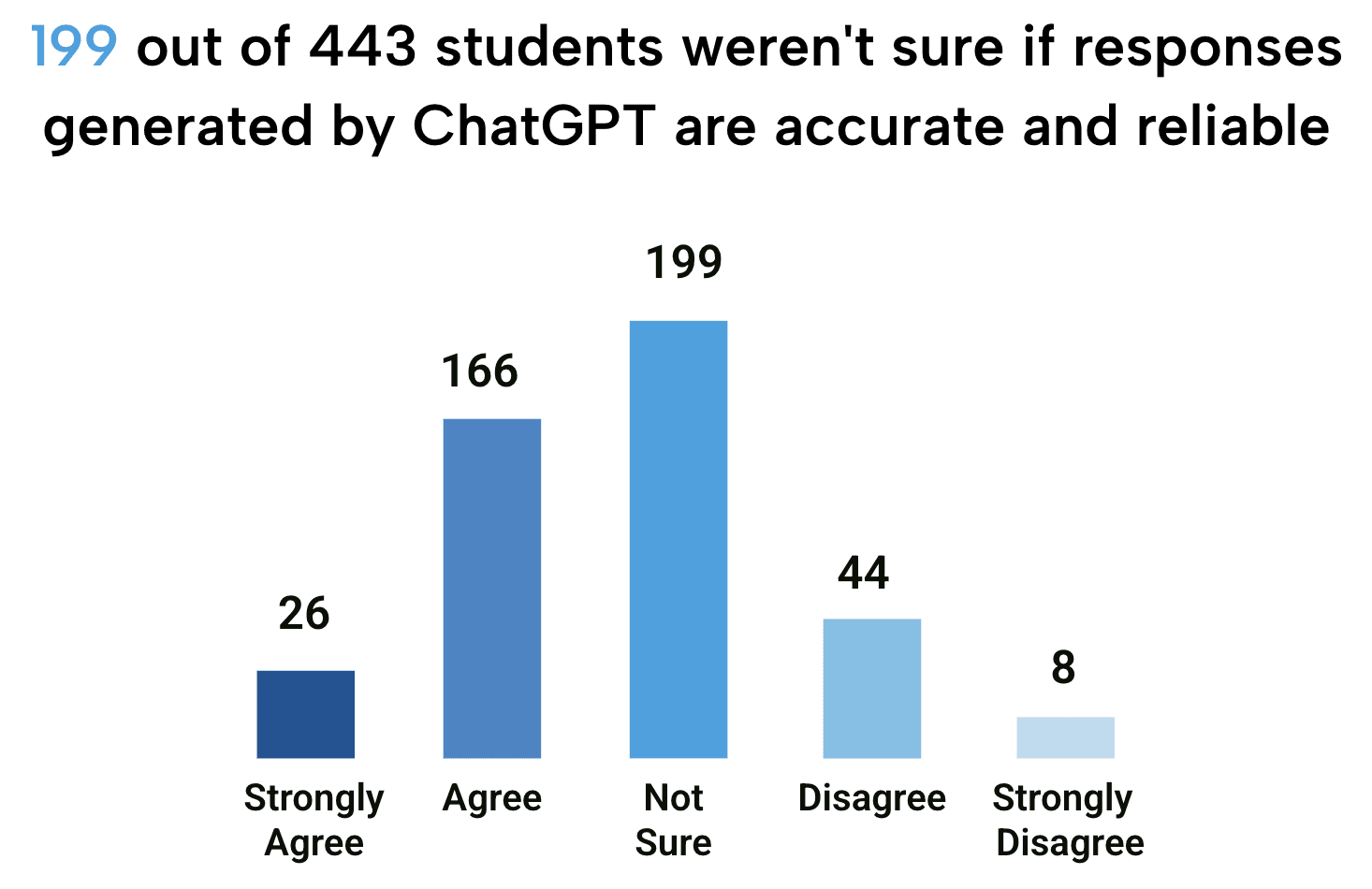
While AI can be helpful, it often falls short in accuracy, reliability, and credibility. Its answers are usually too general and not detailed enough, making it hard for students to grasp complex topics or gain a deeper understanding.
This can cause confusion and make users doubt the content AI provides. As a result, students feel the need to double-check information themselves, which reduces their trust in AI and limits its usefulness for research and studying.
How might we design an Al study companion that provides accurate, reliable, and detailed responses, reducing the need for manual cross-verification?
RESEARCH PLANNING
Selecting Target Audience
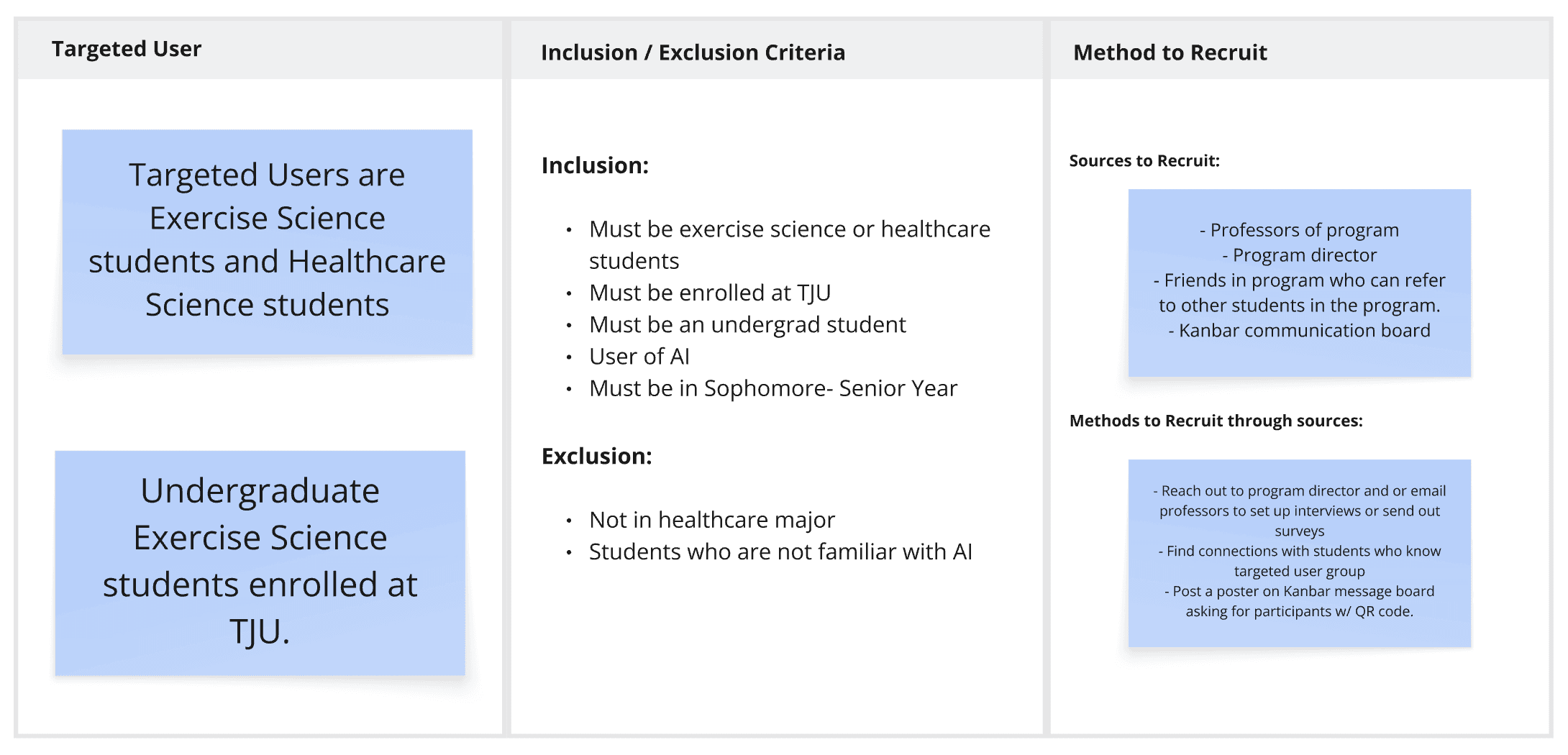
Identifying our target audience was a crucial first step in our research. It was essential to determine which groups would be more accessible and willing to share their AI usage experiences. To do this, we conducted an exercise to pinpoint the subjects that could provide us with valuable insights into AI usage.
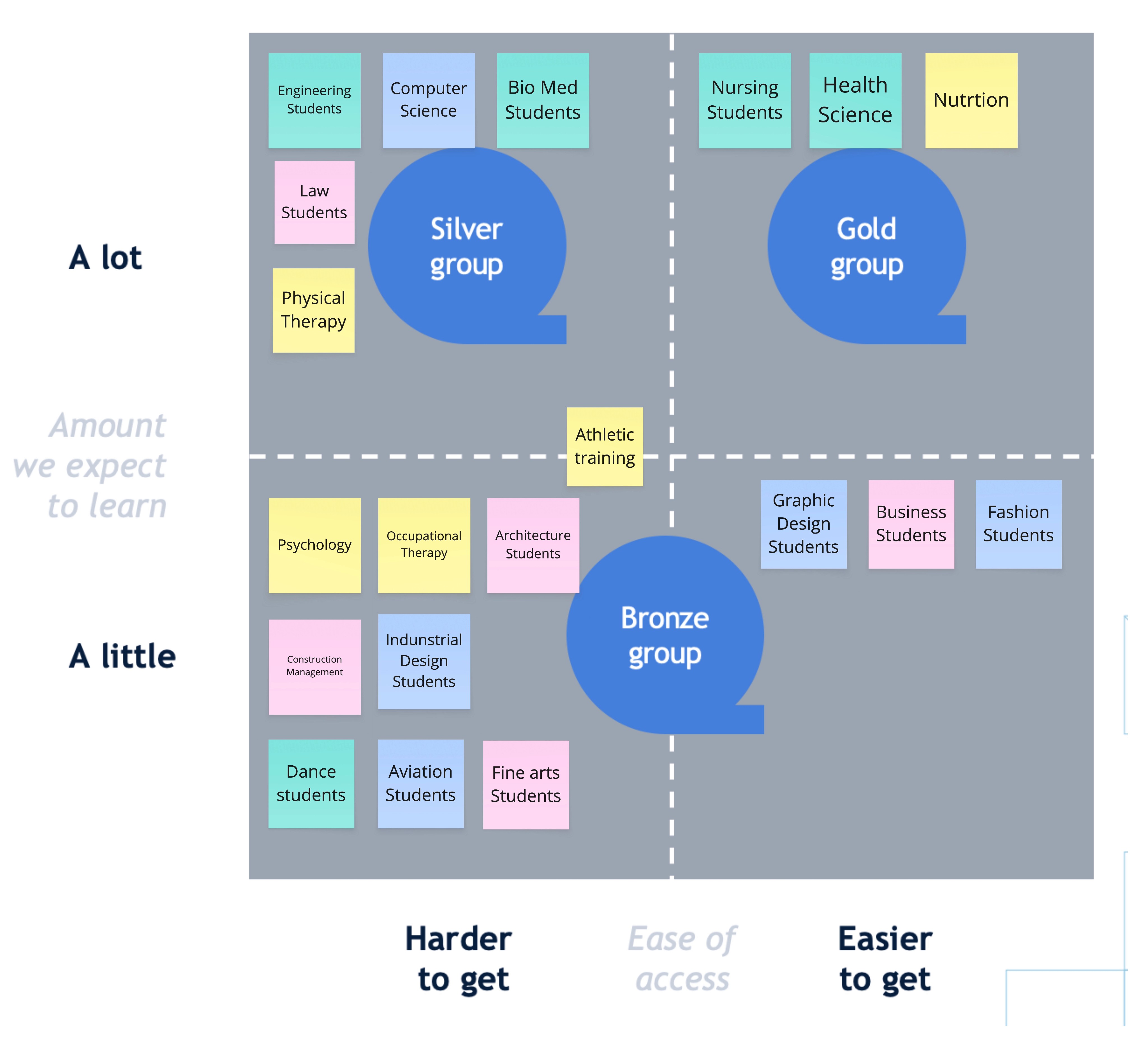
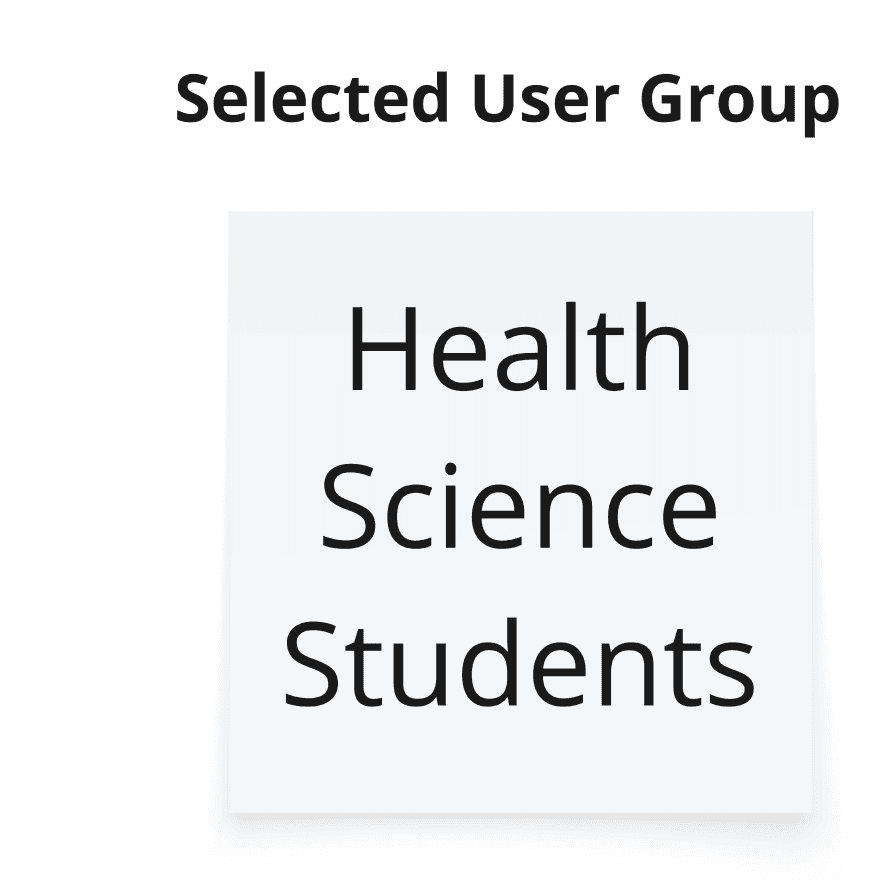
We decided to focus our research on Health Science students from Thomas Jefferson University as our target audience. With this in mind, we began our study, concentrating on their specific needs and challenges.
Research Plan Objectives
Which areas of their studies, such as assignments, summarization, doubts and research do students utilize Al?
What are the study patterns and challenges faced by healthcare majors?
What are students attitudes toward study partners and do they believe that it impacts their academic performance?
KEY INSIGHTS
From our desk research and 12 in-depth user interviews (supported by recordings and transcripts), it became clear that healthcare students see potential in using AI to handle their demanding workloads. Despite this interest, trust remains low. Students value the convenience generative AI provides, yet all participants emphasized the need to verify its outputs, citing concerns over accuracy and insufficient detail.
AI works best as a helpful extra tool, not as the main study buddy. It can make handling schoolwork easier, but it’s not dependable enough to replace regular study methods.
DESK RESEARCH
The Users, The Task and The Environment
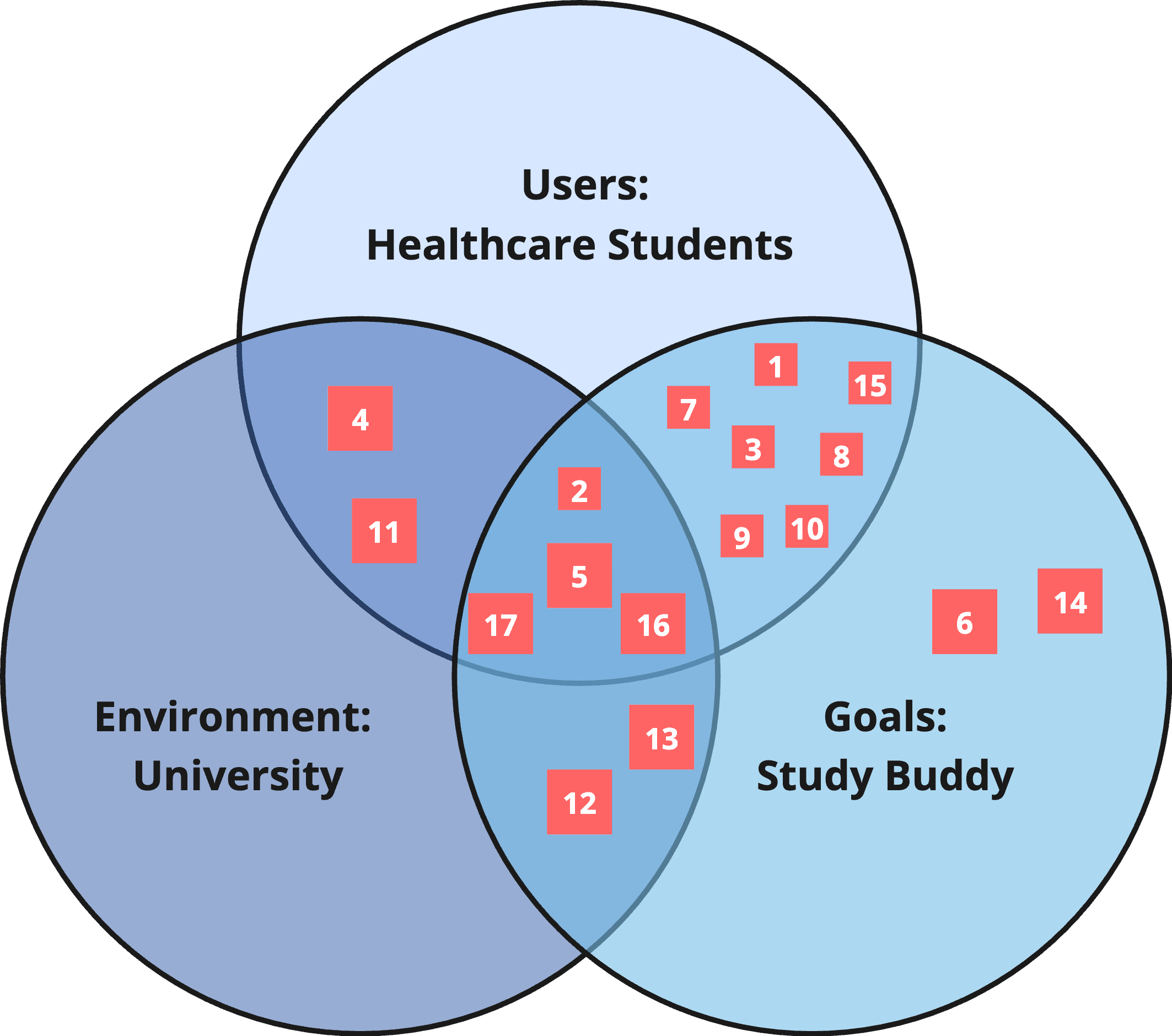
We began by creating a Venn diagram to pinpoint where our goals, target audience, and environment intersected in order to clarify our objectives and focus our research on the key areas of overlap.
As a result, we determined that:
Our task was to conduct in-depth research on AI chatbots.
The users of the AI chatbots would be the health science students.
The environment was Thomas Jefferson University.
Key Findings
USER INTERVIEW
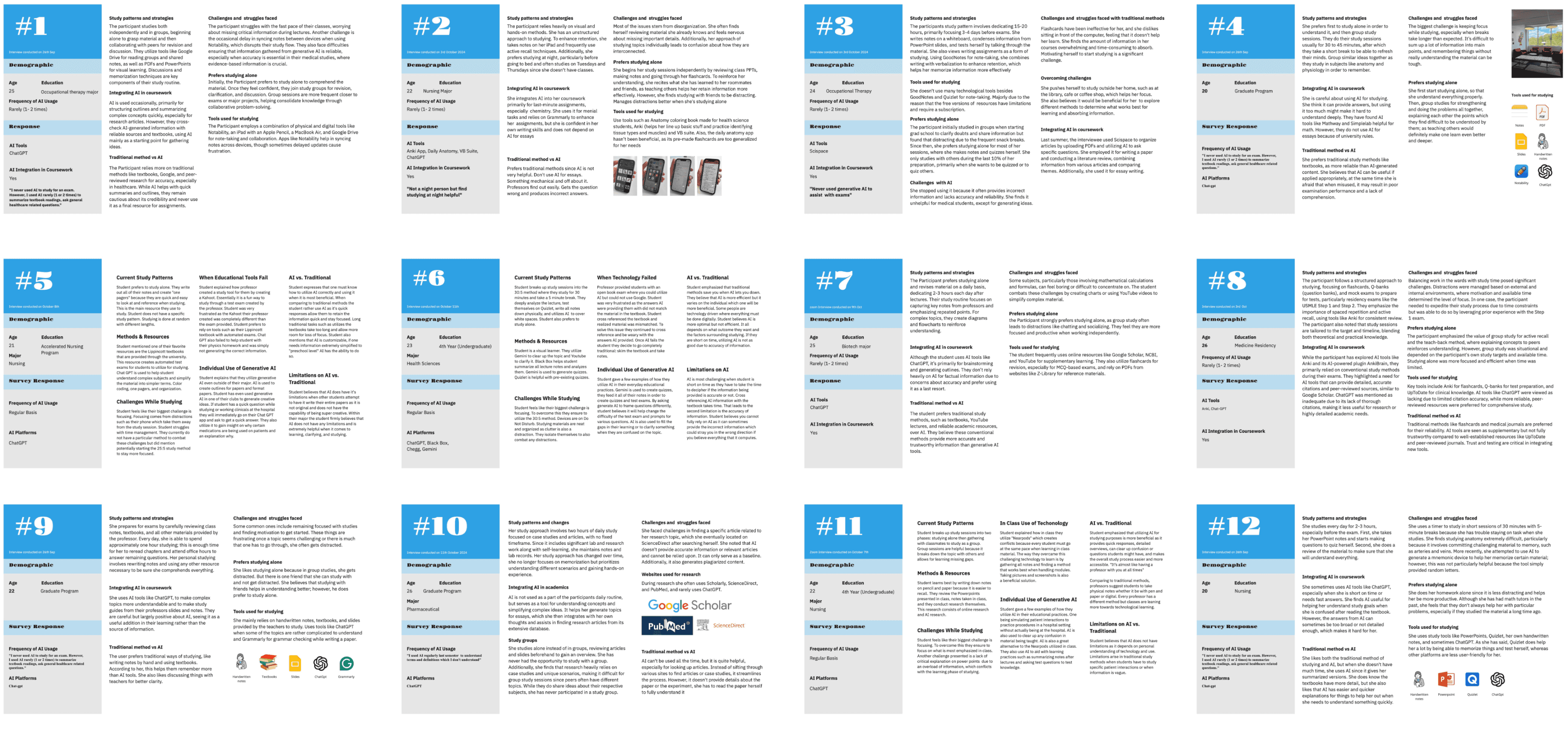
To better understand whether health science students are using generative AI for academic research, and if so, what their experiences have been, we conducted 12 interviews with health science students.
Recruiting Strategy
Interview Objectives
Our objective for these interviews was to gain contextual insights into the research practices of Health science students, understand their perspectives on the use of generative AI, and identify its advantages and pain points.
Debriefing the Interview outcomes
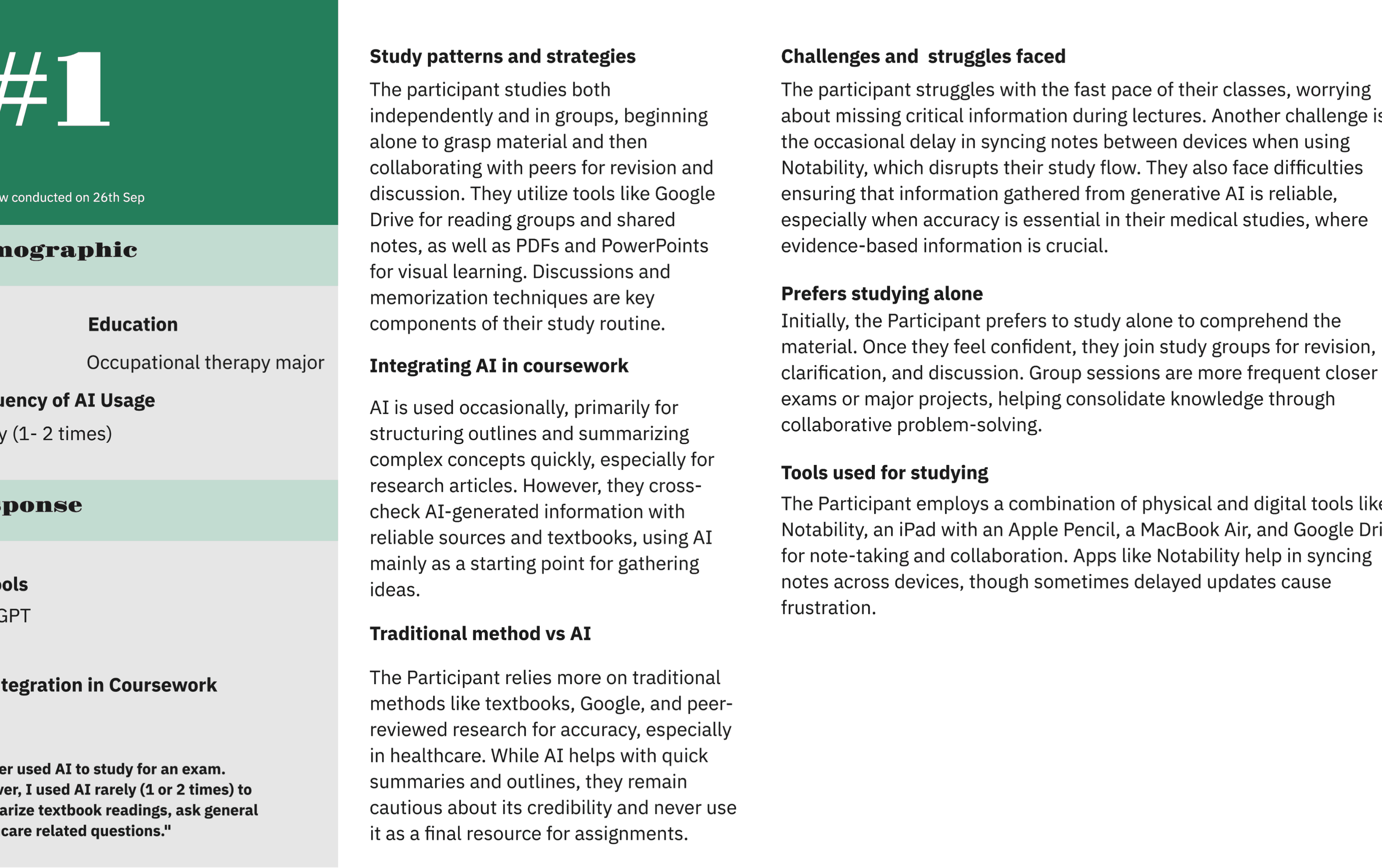
To better understand the pain points and advantages of using Gen AI, we conducted 12 interviews with pharmacy students. Each interview was thoroughly debriefed and systematically organized into individual boards, highlighting the user's benefits, challenges, expectations, and quotes. We then synthesized this information into key takeaways, needs, pain points, and goals, allowing us to identify where problems and advantages overlapped among participants and ultimately guide us toward finding effective solutions.
USER PERSONA
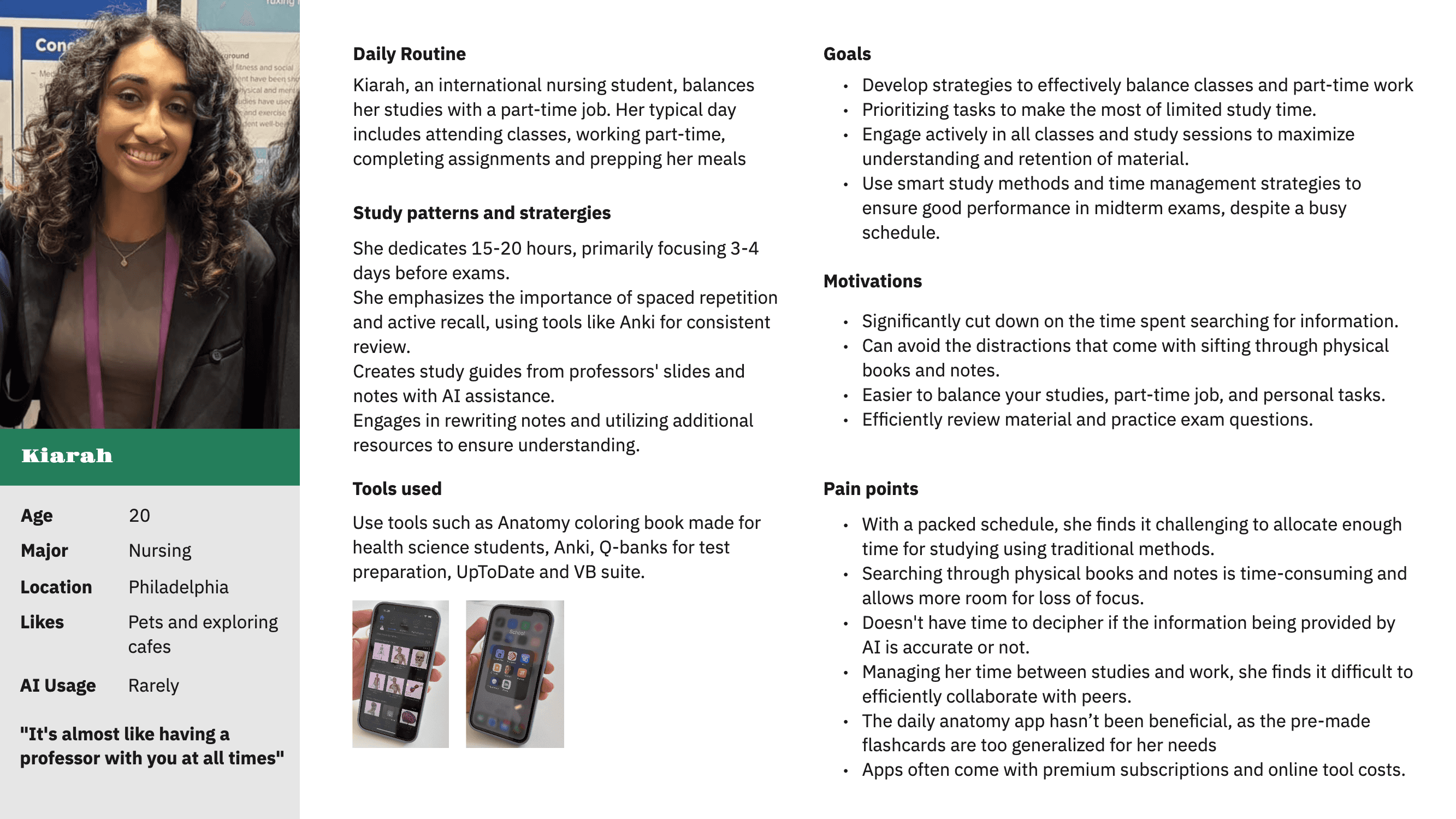
Using insights from our debriefs, we crafted a representative persona.
SOLUTIONS & NEXT STEPS
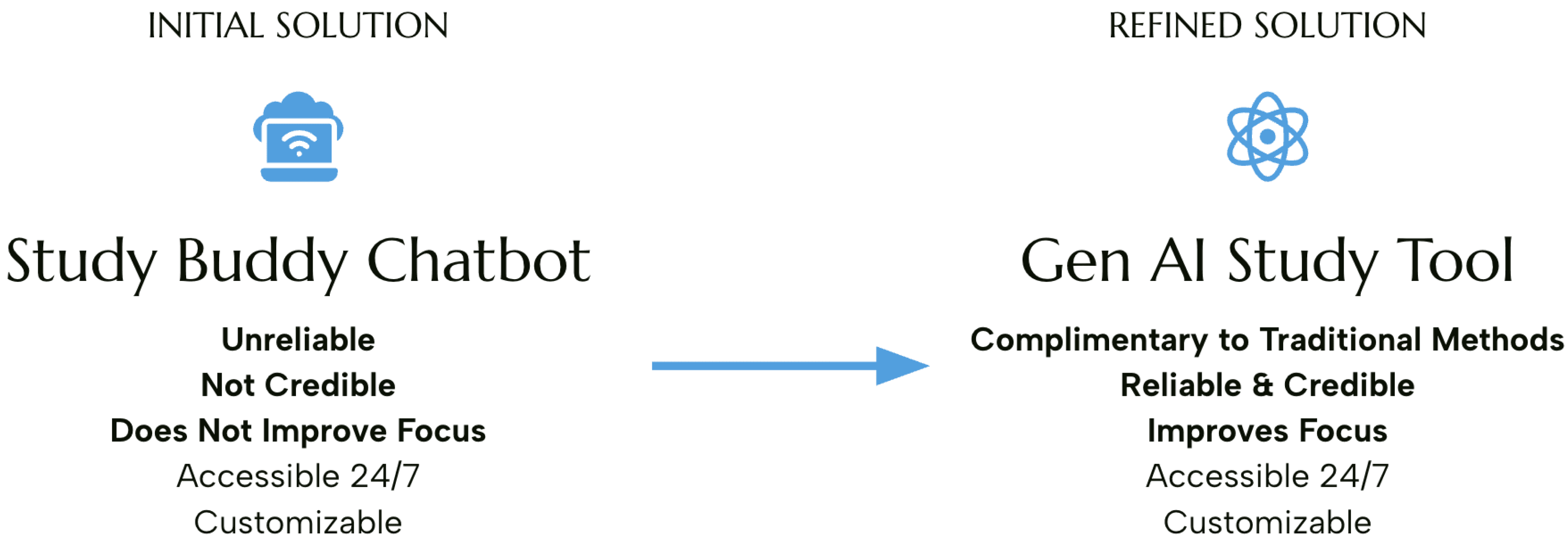
Through our research, we refined our initial concept of Gen AI as a study buddy chatbot. We refined its role, shifting from an interactive companion o a supplemental tool that enhances learning.
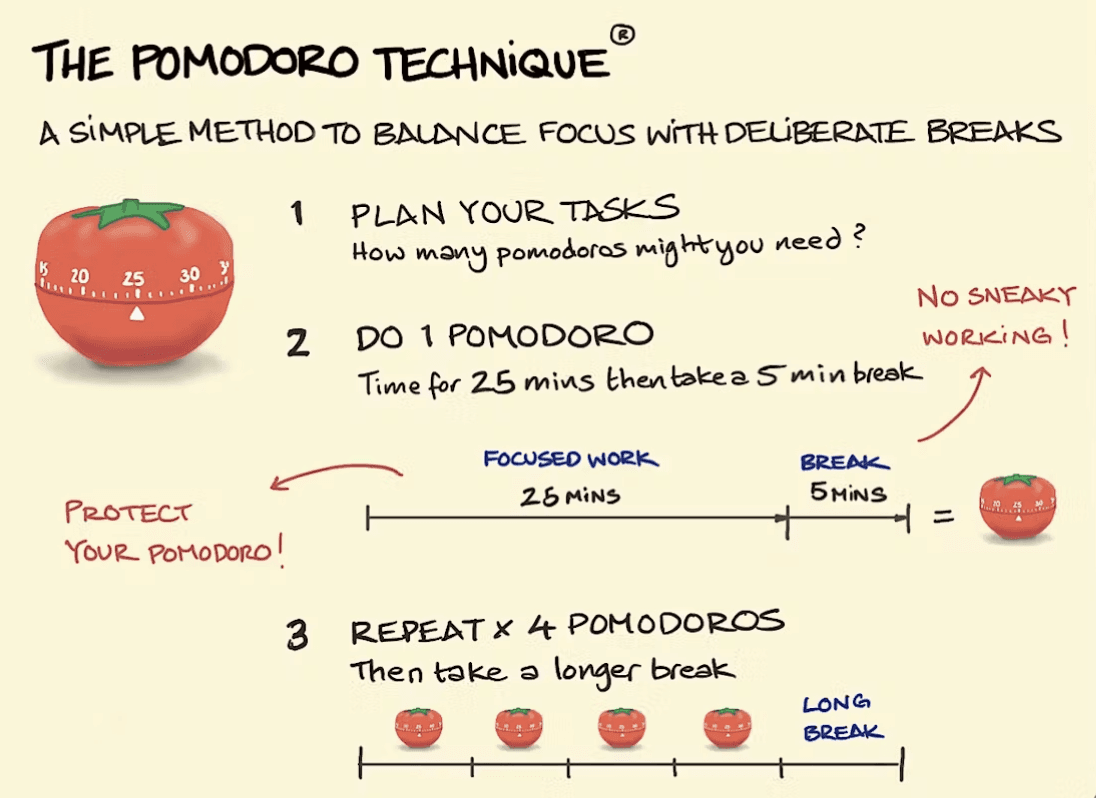
A common theme identified among students s ime management and maintaining focus while studying. To address this, we proposed integrating the Pomodoro method.
An interval based study timer within AI tools encourage structured study habits.
Key Takeaways
Early on, we realized that our initial target audience (Physical Science majors) was too narrow, making it difficult to recruit participants. This led us to broaden our focus and refine our approach.
Similarly, our screener survey required multiple iterations to ensure we were reaching the right participants- what seemed like a good fit on paper didn't always translate into valuable insights.
We also learned that just because someone fills out a survey or agrees to an interview doesn't mean they'll actually show up. No-shows were common, and we had to adapt.
Expect the unexpected: Research is rarely linear, and being open to change is essential for meaningful results.